Zoysia vs Centipede Grass for Low-Maintenance Lawns
Share this post:
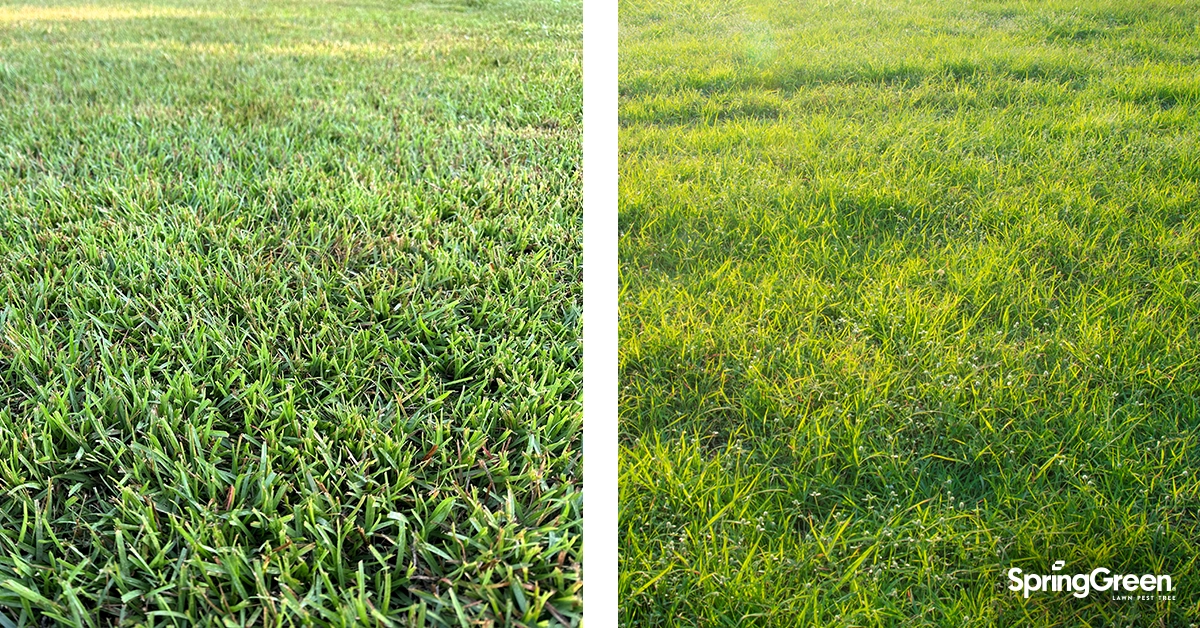
Centipede or Zoysia: Which Grass Best Fits Your Lawn?
Homeowners looking for a low-maintenance lawn are often deciding between centipede and zoysia, two warm season grasses native to Southeast Asia that take kindly to heat and humidity. They also need very little mowing because they grow very slowly or grow horizontally instead of vertically. They have a lot in common. Both grasses create lawns that are easy to take care of, but there are also important differences.
Zoysia & Centipede Identification & Appearance
Zoysia grasses give you a lush green lawn in the spring. It has a look that is probably familiar to that of a golf course. Golf courses across the South prefer zoysia grass for fairways and putting areas, because the grass keeps its manicure, and thanks to its heavy sod and deep roots, holds up nicely to foot traffic.
Centipede grass blades, however, are more yellowish green, and quite short. Centipede grass has a wider blade that gives the lawn a more coarse texture than zoysia. Centipede grass, despite its roots being relatively shallow, provides a nice, thick lawn turf that’s popular for park use. Centipede grass is known as the “poor man's grass,” because it usually only grows to five inches in height, and slowly at that.

Climate & Regional Fit of Grasses
Both grasses are warm-season types suited to the South and parts of the Transition Zone. Zoysia is often installed as sod or plugs rather than seed; centipede can be seeded, but is slow to establish, so timing matters. If your lawn sits near coastal spray or brine, salt tolerance can influence this decision, as zoysia grass is frequently noted as the more salt-resistant option among common warm-season turfgrasses.Sun, Shade & Foot-Traffic Tolerance
Centipede grass is shade tolerant and favors full sun, while zoysia grass is better fit for mixed light and regular foot traffic. Zoysia grass, thanks to its deep roots, holds up better and if damaged, recovers faster than centipede grass.Grass Drought Tolerance & Winter Dormancy
Both grasses are "drought resistant," but zoysia requires more water overall, despite its deeper roots being preferred for surviving extended dry conditions. When not watered well during dry seasons, zoysia grass will survive, but discolor, and stop growing.Watering Centipede vs. Zoysia Grass
Centipede grass prefers deeper, less-frequent watering. Most homeowners only water their centipede lawn on an as-needed basis, when the grass starts turning brown. Once you water it, centipede grass is quick to return to its normal vibrant color. Zoysia’s deep rooting helps it tolerate drought, but it will discolor and pause growth when water is withheld. Follow deep, even soakings rather than frequent light spritzes; resume normal mowing once color returns. To keep either grass low-maintenance, SpringGreen’s watering guide emphasizes consistent, deep watering, rather than frequent, shallow cycles.High Altitude Regions & Frost Tolerance of Grasses
Is your home at a high altitude, or otherwise prone to the occasional frost? Zoysia grass wins some points here for cold adaptability. During a frost, zoysia lawns go dormant. It turns and stays brown until the air temperature returns to 70 degrees. It copes with the cold weather. Centipede grass is less hardy: With repeated dips below 32 degrees, it’s subject to winter kill, which would not end up being so “low-maintenance” after all, if you had to replace your lawn after a cold snap. Warm-season grasses like zoysia and centipede Grass commonly slow or go dormant in winter. To present damage, minimizing foot traffic on dormant turf helps protect the grass from winter-kill.Centipede Grass Care Basics
Recommended mowing height, deeper but less frequent watering, and modest feeding keep centipede low-maintenance. Soil pH considerations and common pitfalls are included to reduce decline and thin spots.Growing Centipede Grass: Video Guide
Learn how to grow Centipede Grass with helpful tips from lawn care expert Harold Enger.Centipede Grass Mowing Height & Schedule
For a healthy, tidy centipede lawn, Spring Green recommends a mowing height of ~1–1.5 inches. Keep blades sharp and avoid scalping; mowing within range helps the turf conserve water and resist weeds.Centipede Grass Fertilizer & Soil pH Basics
Centipede grasses generally need less fertilizer than many warm-season grasses. Avoid heavy nitrogen and don’t fertilize late into fall so you don’t push tender growth heading into cool weather. For optimal fertilization, SpringGreen recommends a soil pH near 6.0–7.0 for best performance, and suggests the use of soil testing guides any lime or sulfur adjustments.Common Issues: Lawn Disease, Centipede Decline, Bare Spots
Centipede grass can be susceptible to lawn diseases like Centipede Decline and Large Patch under certain conditions (excess moisture, thatch, or off-timing fertilization). Managing thatch and avoiding excessive nitrogen help reduce pressure.Zoysia Grass Care Basics
A short mowing range, deep watering, and light-to-moderate feeding support a dense zoysia canopy. Thatch tendency and slower spring green-up are acknowledged so maintenance and timing stay realistic.Growing Emerald Zoysia Grass: Video Guide
Learn more about how to grow Zoysia Grass in this helpful video from lawn care expert Harold Enger.Zoysia Mowing Height & Schedule
Zoysia looks best maintained shorter but not scalped. SpringGreen recommends upkeep at ~0.75–2 inches as the typical range. Mow consistently during spring green-up, and raise the height slightly during summer stress.Zoysia Fertilizer & Thatch Management
Zoysia grass often needs light-to-moderate feeding during active growth. It’s of the warm-season grasses prone to Thatch; SpringGreen recommends core aeration as the most lawn-friendly way to reduce and control thatching over time.Common Issues: Zoysia Patch, Slow Spring Green-Up
Zoysia grass can show Large Patch symptoms as lawns come out of winter, especially where thatch or excess nitrogen is present. Good mowing height, appropriate feeding, and thatch control help prevent thatch. Expect a slow spring green-up in cooler springs, that’s normal for zoysia, and warm-season turf.Establishing a Low-Maintenance Lawn
When starting a fresh new lawn, it is standard to establish centipede grass from seed or sod, and zoysia grass from plugs or sod, each with different coverage speeds and costs. Timing, site preparation, and whether an existing lawn is being converted, will shape the best approach.Centipede Seed vs Sod, When to Choose Each
Grass seed suits patient timelines and lower upfront costs, working well for bare, prepared soil or for overseeding after core aeration. Sod fits situations that need rapid, uniform cover and better erosion control, such as slopes, high-visibility areas, or lawns with heavier weed pressure.Establishing Centipede Grass
To overseed your existing lawn with centipede, mow it down low in the late spring, core aerate the lawn, then broadcast the seed. If you don’t core aerate first, rake the lawn well after you broadcast the seed. Centipede seeds need to be covered by dirt in order to germinate. After 30 days, your lawn will start to thicken, and gradually transform into a centipede lawn, this usually takes a full three months from the day you seed. If you’re starting with tilled earth, which is especially recommended if you have Bermuda grass already in place, seed the bare ground sometime between April and July. After that, rake to help seeds eventually find a spot under the dirt, then apply fertilizer, and mow regularly through the summer. You will not see any grass inside the first four weeks after seeding.Zoysia Sod vs. Plugs
For replacing cool-season grass, use zoysia plugs. It can take two years for zoysia to become the dominant grass in your yard, and it will stop advancing on your old grass during extended dry periods. Do not attempt to insert zoysia plugs into an existing warm-season grass like Bermuda, or centipede grass, as zoysia will overtake them. The existing grass will have to be removed first.Starting with bare ground Zoysia seeds work better than plugs, and it will usually take five months to establish. Once it’s in, Zoysia is very difficult to remove. Zoysia is usually installed as sod or plugs; if you’re repairing winter damage, choose sod/plugs and don’t mix different grasses in the same lawn. If you’re still not sure which is right for your lawn, SpringGreen’s guide to picking the right grass seed will provide you with more information.